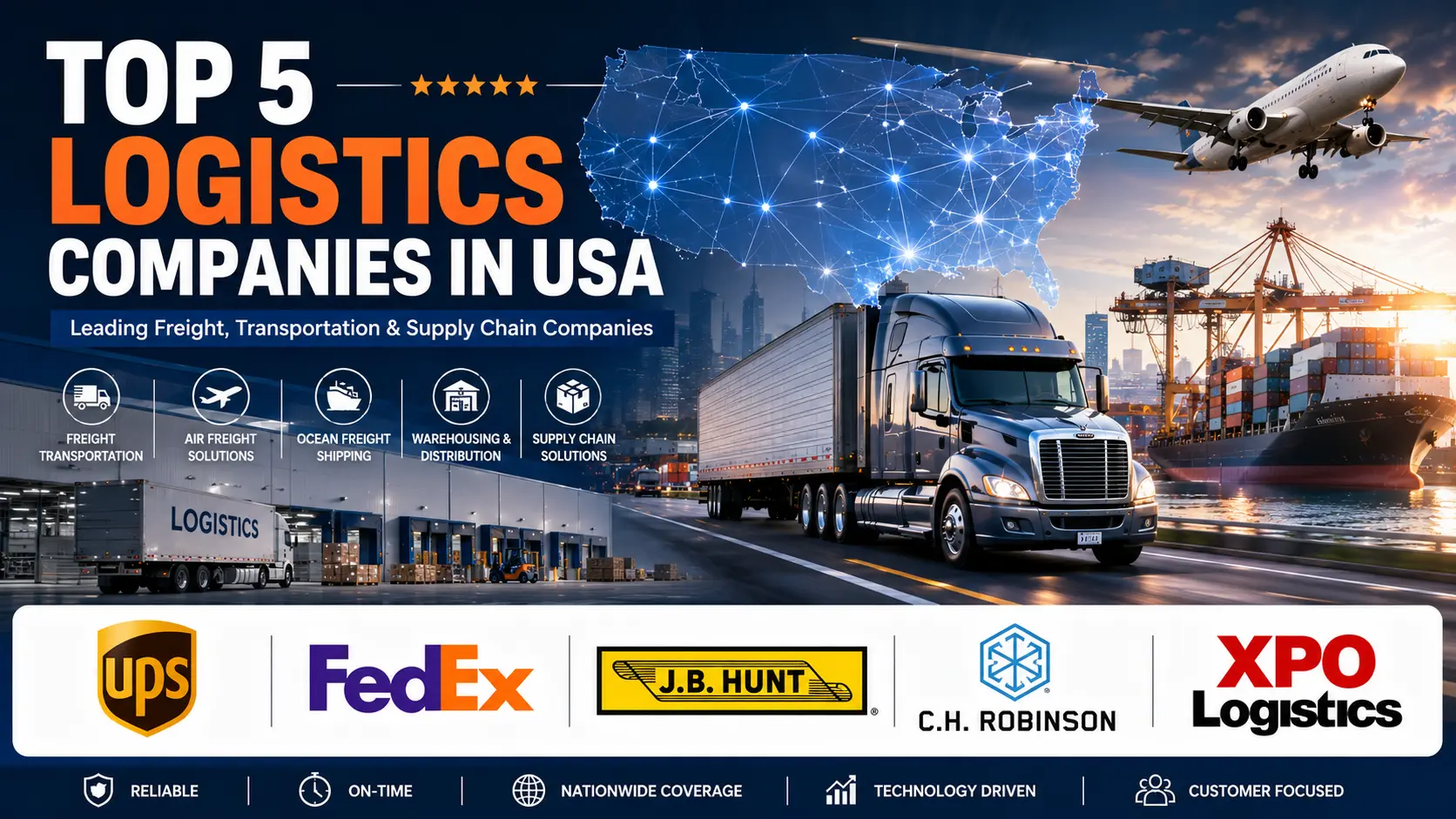
Top 5 Logistics Companies in USA
When it comes to the top 5 logistics companies in USA, a handful of names dominate every measure of scale, reliability, and technology. These five companies have built the networks, platforms, and expertise to handle virtually any freight challenge. This guide gives you everything you need to understand what makes each one exceptional and which is the right fit for your supply chain.
The United States logistics industry is the backbone of the entire national economy, moving trillions of dollars worth of goods every year across thousands of miles of highways, rail networks, air corridors, and ocean shipping lanes. From the moment a product leaves a factory floor to the second it arrives at a consumer’s doorstep, logistics companies are responsible for every step in between. Without an efficient, reliable logistics network, retailers would run out of stock, manufacturers would halt production, and global supply chains would collapse entirely.
The five companies profiled in this guide represent the absolute pinnacle of American logistics. Each one has spent decades — in some cases over a century — refining their operations, building out their infrastructure, and investing heavily in the technologies that define modern freight movement. These are not simply trucking companies. They are sophisticated, technology-driven enterprises that operate fleets of aircraft, manage vast warehouse networks, run proprietary digital freight platforms, and serve Fortune 500 clients across every major industry vertical including retail, healthcare, automotive, aerospace, and consumer goods.
What separates the top 5 logistics companies in USA from thousands of smaller regional operators comes down to four key pillars: scale, technology, reliability, and specialization. Scale means having enough trucks, planes, warehouses, and carrier relationships to handle virtually any volume at any time. Technology means owning platforms that give shippers real-time visibility, AI-powered routing, and seamless integration with their own ERP or inventory systems. Reliability means consistently meeting delivery windows with low damage and claims rates. And specialization means having deep expertise in specific freight types — whether that is temperature-controlled pharmaceutical shipments, high-volume intermodal container moves, or time-critical overnight express packages.
Choosing the right logistics partner can directly impact your bottom line, your customer satisfaction scores, and your ability to scale operations. A mismatch between your freight profile and your logistics provider leads to missed deliveries, inflated costs, and operational headaches that compound over time. This guide breaks down exactly what each of the top five companies does best, how their revenues and workforces compare, and what type of shipper is the ideal fit for each one — so you can make a fully informed decision before signing any contract or committing to a long-term relationship.
Top 5 Logistics Companies in USA: Industry Overview
Top 5 Logistics Companies in USA: Detailed Company Profiles
UPS is the world’s most recognized logistics brand. Beyond brown trucks, their supply chain division covers air and ocean freight, customs brokerage, cold-chain pharma logistics, and enterprise warehousing. They operate the world’s 9th largest airline and are expanding electric vehicle delivery fleets across US metro areas.
FedEx invented overnight delivery and has never stopped innovating. Their automated super-hubs sort millions of packages daily using AI and robotics. FedEx Ground has grown into a dominant force in residential e-commerce delivery, while FedEx Logistics handles complex international moves with customs expertise.
J.B. Hunt owns the intermodal market. They operate the largest private container fleet in the US and their 360 digital platform gives shippers instant capacity access and real-time visibility. For long-haul freight over 750 miles, intermodal shipping via J.B. Hunt typically saves 15–30% versus all-highway trucking.
C.H. Robinson does not own trucks. They use their 100,000-plus carrier network and Navisphere machine learning platform to find the best available truck for any shipment. This asset-light model makes them extremely flexible and cost-competitive across truckload, LTL, intermodal, air, and ocean freight worldwide.
XPO is the most technology-focused pure-play LTL carrier in North America. They use robotics at dock facilities, AI for linehaul routing, and predictive analytics to minimize service failures before they happen. Their XPO Connect platform makes booking and tracking LTL freight as easy as booking a ride-share.
Top 5 USA Logistics Companies Compared Side-by-Side
| Company | Founded | Revenue | Employees | Specialty |
|---|---|---|---|---|
| UPS | 1907 | ~$91B | 500,000 | Global parcel, healthcare |
| FedEx | 1971 | ~$90B | 550,000 | Express, ground & freight |
| J.B. Hunt | 1961 | ~$14B | 35,000 | Intermodal & contract carriage |
| C.H. Robinson | 1905 | ~$18B | 19,000 | Freight brokerage, LTL |
| XPO Logistics | 1989 | ~$8B | 42,000 | LTL & tech operations |
Revenue of the Top 5 Logistics Companies in USA
How to Choose the Best Logistics Company in USA for Your Business
Know your shipment sizes, lanes, frequency, and any special handling requirements before contacting any provider.
Ensure their platform integrates with your systems. Poor tech integration creates friction and errors across every shipment.
Ask for case studies and references from businesses in your exact vertical, not just general logistics experience.
The service level agreement and claims process are where the real quality of a logistics partner shows up.
Key Insight: Always get quotes from at least three providers before committing. Rates and service levels vary significantly even among top-tier logistics companies.